I’m tired of being gaslit by the tech industry about the future of work.
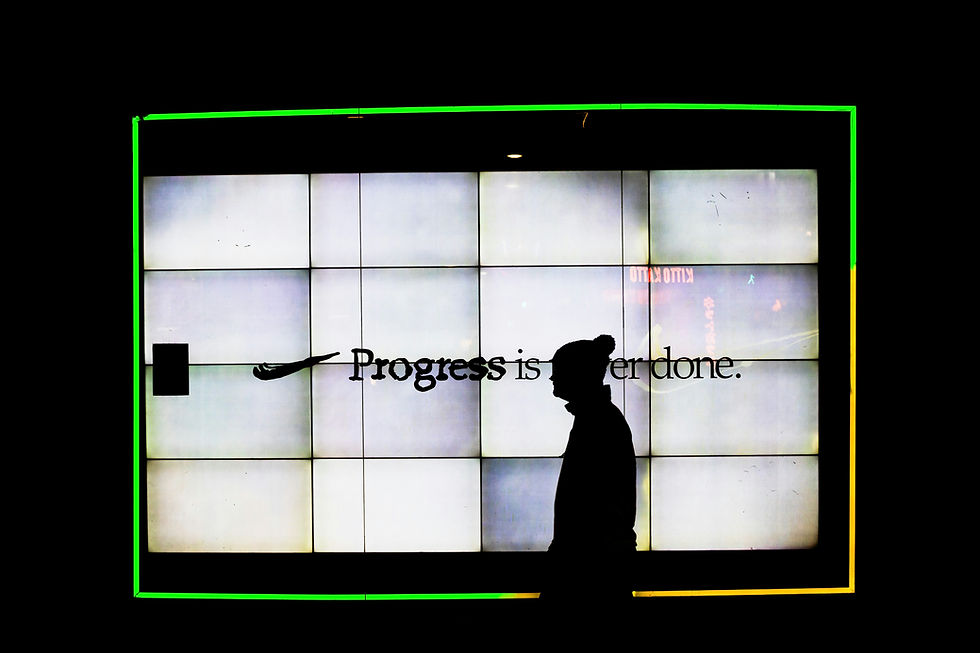
There. I said it.
For years, we have been told that technology is transforming work.
That AI will make hiring smarter.
That automation will make everything more efficient.
That algorithms will help employers find the right people.
That if we just innovate faster, automate more and remove enough obstacles to technological progress, somehow a better future of work will emerge.
I don’t believe that anymore.
And I say that as someone who has been part of this industry for a very long time.
In 1999, I was designing UX/UI for Aquent.
It was an extraordinary moment.
The internet was changing how people found work.
Monsterboard was becoming Monster.com.
CareerBuilder was emerging. Online talent marketplaces were replacing newspaper classifieds and staffing processes that had barely changed for decades.
I used Monsterboard myself for years.
At the same time, Lem Lloyd — whom I had the pleasure of speaking with this week — was working from another side of that transformation, helping develop and scale some of the employment marketplaces that would become part of the infrastructure of online recruitment.
We were both, in very different ways, participating in the construction of what became the digital recruitment industry.
And it really was progress.
We moved jobs online.
We made opportunities searchable.
We connected employers and candidates across geographies.
We built interfaces that allowed millions of people to participate in a labor market that suddenly felt much bigger than the classified section of the Sunday newspaper.
But here is the uncomfortable part.
Twenty-seven years later, we have changed the technology far more than we have changed the underlying system.
The résumé survived.
The job description survived.
The application survived.
The screening survived.
The recruiter’s shortlist survived.
And the assumptions underneath all of them survived.
We digitized recruitment.
Then we optimized it.
Then we automated it.
And now we are adding AI to it.
But we never really stopped to ask whether we were automating the right system.
And now the consequences are becoming harder to ignore.
People with decades of experience are screened out.
People returning to work struggle to explain career gaps.
Someone whose capability was built outside the “right” university or company can disappear before a human ever sees them.
Career changers are judged by what they have already been called rather than what they are capable of doing next.
Neurodivergent people are pushed through processes designed around somebody else’s idea of how a candidate should communicate and perform.
And increasingly, automated systems are making those decisions faster.
That isn’t necessarily progress.
Sometimes it is simply industrializing the old biases.
I know this personally.
I have decades of experience in technology, product design, UX, learning and innovation.
I helped build digital experiences when many of the technologies we now take for granted barely existed.
And yet I also know what it feels like to enter today’s employment system and discover that it struggles to understand someone whose experience doesn’t fit neatly into the boxes it was designed to process.
That experience is one of the reasons I started Adonea.ai.
I am no longer interested in building a better résumé filter.
I want us to question why the résumé remains the primary representation of a human being’s capability in the first place.
I don’t want employers to be told to “look past” somebody’s age.
Or their unconventional career.
Or the absence of a particular credential.
Or a period outside the workforce.
Those things only need to be “looked past” because our systems have made them proxies for something else:
Can this person actually do the work?
So why not build around that question directly?
That is the shift behind Adonea.
From claims to demonstrated capability.
From career history to evidence.
From ranking people against each other to understanding whether someone can meet the actual requirements of the work.
And from interfaces designed around databases, forms and dashboards to something I believe will define the next generation of human–AI interaction:
intent.
The next interface may not be a dashboard at all.
For decades, software has required humans to learn the structure of the machine.
Find the right menu.
Fill in the right field.
Upload the right document.
Select the right filter.
Navigate the dashboard.
Learn the workflow.
AI gives us an opportunity to reverse that relationship.
The person should be able to express what they are trying to accomplish.
The system should understand the intent, help establish what information is actually needed, explain what is happening and work with the person to accomplish it.
The complexity belongs behind the interface — not inside the human being’s head.
That matters enormously in employment.
A candidate should not need to become an expert in résumé optimization simply to make their ability visible.
An employer should not have to guess what they really need by recycling a ten-year-old job description.
And neither side should need another dashboard full of scores, rankings and recommendations they cannot meaningfully interrogate.
That is the human–AI interaction I am interested in building.
Not AI replacing human judgment.
Not AI making consequential decisions invisibly.
AI helping humans express intent, establish evidence, understand relevance and make better decisions.
Meanwhile, Silicon Valley keeps offering us grand predictions.
We hear visions in which AI creates such extraordinary abundance that conventional employment may eventually become unnecessary and governments could provide everyone with a “universal high income.”
Perhaps technology will eventually create forms of abundance we cannot currently imagine.
But people have lives to live now.
They have mortgages.
Rent.
Children.
Parents.
Care responsibilities.
Ambitions.
A desire to contribute.
And a need for meaningful work.
We also keep hearing that AI development must move faster, that regulation risks slowing innovation, and that America must win an AI race against China.
But I think we need to ask a different question.
What exactly are we racing toward?
Speed is not a social outcome.
Scale is not a social outcome.
Automation is not a social outcome.
Winning a technology race means very little to the person who cannot get through an automated hiring process and cannot understand why.
Technology should serve human life.
Human life should not become collateral damage in the pursuit of technological supremacy.
My conversation with Lem reminded me of something.
The first internet employment revolution was built by people who genuinely believed we could make finding work better.
In many ways, we did.
But every generation inherits the assumptions of the technology that came before it.
Eventually, someone has to question them.
I think we have reached that point in recruitment.
The answer cannot simply be:
more AI + the existing hiring system.
That risks making everything we already know is wrong happen faster and at greater scale.
The next wave needs a different foundation.
One where human capability matters more than pedigree.
Where evidence matters more than proxies.
Where technology helps people become understood rather than categorized.
Where AI works with humans rather than deciding their worth.
And where the people who have actually experienced the failures of the existing labor market have a meaningful role in designing its replacement.
Twenty-seven years ago, I helped design part of the digital recruitment world that was coming.
Today, I want to help build what comes after it.
Because I’m tired of talking about the future of work.
It’s time to build it.